Gene Expression in Science: A Complete Guide to Cellular Function
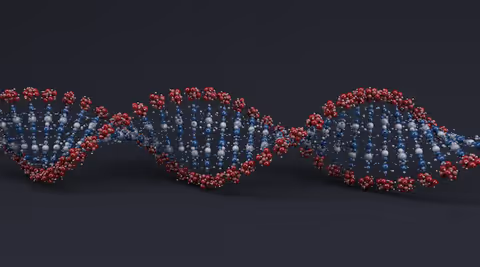
Gene expression is the biological process through which information stored in DNA is used to create functional products like proteins. These proteins are responsible for nearly every function in living organisms, including growth, metabolism, and response to the environment.
At its core, gene expression allows cells to interpret genetic instructions. Not all genes are active at the same time. Instead, cells selectively turn genes on or off depending on their role and environmental conditions. This regulation ensures that a muscle cell behaves differently from a nerve cell, even though both contain the same DNA.
The process mainly occurs in two stages:
- Transcription, where DNA is copied into messenger RNA (mRNA)
- Translation, where mRNA is used to build proteins
This system exists because organisms need flexibility. Without gene expression, cells would not adapt to changing conditions or perform specialized tasks. It is the foundation of biological diversity and cellular function.
Why Gene Expression Matters in Modern Science
Gene expression plays a critical role in understanding health, disease, and biotechnology. It affects multiple areas of science and everyday life.
One of its key contributions is in medical research. Scientists study gene expression patterns to understand diseases such as cancer, where certain genes become overactive or inactive. This knowledge helps in developing targeted therapies and diagnostic tools.
Another important area is personalized medicine. By analyzing gene expression, researchers can determine how individuals respond to treatments. This allows more accurate and tailored healthcare strategies.
Gene expression is also essential in:
- Agriculture, where it helps improve crop resistance and yield
- Pharmaceutical development, by identifying drug targets
- Biotechnology, including genetic engineering and synthetic biology
In today’s world, where data-driven healthcare and precision science are growing, gene expression provides a reliable framework for solving complex biological problems.
Recent Updates and Trends in Gene Expression Research
Over the past year, gene expression research has seen significant advancements, particularly in technology and data analysis.
In 2025, scientists expanded the use of single-cell RNA sequencing (scRNA-seq), allowing researchers to study gene expression at the level of individual cells. This has improved understanding of diseases such as cancer and neurological disorders.
Another key development is the integration of artificial intelligence (AI) in gene expression analysis. AI models are now used to predict gene activity patterns and identify potential treatment targets more efficiently.
Recent trends include:
- Increased use of CRISPR-based gene editing to control gene expression
- Growth in multi-omics approaches, combining genomics, transcriptomics, and proteomics
- Expansion of cloud-based bioinformatics platforms for large-scale data analysis
In early 2026, global research initiatives also emphasized open-access gene expression databases, making scientific data more accessible to researchers worldwide. These changes are improving collaboration and accelerating discoveries.
Laws, Regulations, and Ethical Considerations
Gene expression research is influenced by various laws and ethical guidelines, especially when it involves genetic data and human subjects.
In many countries, research is guided by organizations such as:
- Indian Council of Medical Research (ICMR)
- Department of Biotechnology (DBT)
These bodies provide frameworks for ethical research practices, including informed consent and data privacy.
Globally, regulations like the General Data Protection Regulation (GDPR) in Europe affect how genetic data is stored and shared. Researchers must ensure that personal genetic information is protected.
There are also ethical concerns related to gene editing and manipulation. Governments and scientific organizations continue to develop policies that balance innovation with safety and ethical responsibility.
Key policy considerations include:
- Protection of genetic data
- Ethical use of gene editing technologies
- Transparency in research practices
These regulations ensure that gene expression studies are conducted responsibly and benefit society without causing harm.
Tools and Resources for Gene Expression Analysis
Modern gene expression research relies heavily on advanced tools and platforms. These resources help scientists analyze complex biological data efficiently.
Common Tools and Platforms
- RNA Sequencing (RNA-seq): Used to measure gene activity across the genome
- Microarray Analysis: Helps compare gene expression levels in different samples
- Bioinformatics Software: Tools like R and Python libraries for data analysis
- Genome Browsers: Visualize gene locations and expression patterns
- Databases: Public repositories storing gene expression data
Popular Online Resources
- Gene Expression Omnibus (GEO)
- Ensembl Genome Browser
- The Cancer Genome Atlas (TCGA)
- UniProt Protein Database
These tools support researchers in understanding gene behavior, identifying patterns, and drawing meaningful conclusions from biological data.
Comparison of Gene Expression Techniques
| Technique | Description | Advantages | Limitations |
|---|---|---|---|
| RNA Sequencing | Measures RNA levels across genome | High accuracy, detailed data | Requires advanced analysis tools |
| Microarray | Detects gene expression using probes | Cost-effective, fast | Limited to known sequences |
| qPCR | Quantifies specific gene expression | Highly precise | Limited to few genes |
| Single-Cell RNA-seq | Analyzes expression in individual cells | High resolution insights | Expensive and complex |
Frequently Asked Questions
What is gene expression in simple terms?
Gene expression is the process by which information from DNA is used to produce proteins that perform functions in the body.
Why is gene expression important?
It helps cells function properly, adapt to changes, and develop specialized roles in the body.
Can gene expression change over time?
Yes, gene expression can change due to environmental factors, age, lifestyle, and disease conditions.
How is gene expression studied?
Scientists use techniques like RNA sequencing, microarrays, and PCR to measure gene activity.
Is gene expression related to genetic disorders?
Yes, abnormal gene expression can lead to diseases such as cancer, diabetes, and genetic disorders.
Conclusion
Gene expression is a fundamental concept in science that explains how genetic information becomes functional in living organisms. It connects DNA to real biological outcomes, influencing everything from cell behavior to disease development.
With rapid advancements in technology, including AI and sequencing methods, gene expression research is becoming more precise and impactful. At the same time, ethical guidelines and regulations ensure responsible use of genetic information.
Understanding gene expression not only supports scientific progress but also helps address real-world challenges in healthcare, agriculture, and biotechnology.
Disclaimer: The information provided in this article is for informational purposes only. We do not make any claims or guarantees regarding the accuracy, reliability, or completeness of the information presented. The content is not intended as professional advice and should not be relied upon as such. Readers are encouraged to conduct their own research and consult with appropriate professionals before making any decisions based on the information provided in this article.