Diamond Necklace Designs Overview: Learn Core Concepts, Style Trends, and Helpful Resources
Diamond necklace designs refer to the structured arrangement of diamonds and precious metals to create wearable jewelry pieces worn around the neck. These designs exist to combine visual elegance, symbolic value, and craftsmanship into a form that enhances personal style while maintaining durability and comfort. Diamond necklaces range from minimal designs with a single stone to intricate compositions featuring multiple diamonds arranged in artistic patterns.
As gemstone cutting techniques advanced and jewelry craftsmanship evolved, diamond necklaces became more refined and versatile. Designers began focusing on balance, proportion, and setting techniques to maximize brilliance while ensuring structural integrity.
Today, diamond necklace designs represent a blend of tradition and modern aesthetics, reflecting both artistic expression and precise gem-setting standards.
Importance: Why Diamond Necklace Designs Matter Today
Diamond necklace designs matter because they demonstrate the intersection of art, engineering, and material science in fine jewelry. Their structure influences comfort, durability, and visual impact.
Who values diamond necklace designs
- Jewelry designers and artisans
- Gemology and craftsmanship learners
- Fashion historians and stylists
- Collectors of fine jewelry
- Individuals interested in classic and modern jewelry styles
Key qualities diamond necklace designs emphasize
- Diamond arrangement and symmetry
- Secure and refined setting techniques
- Balance between aesthetics and wearability
- Consistency in material quality
- Adaptability across formal and everyday contexts
- Long-term relevance in jewelry design
By focusing on precision and harmony, diamond necklace designs illustrate essential principles of fine jewelry creation.
Recent Updates and Trends (2025–2026)
Diamond necklace designs continue to evolve with subtle changes in craftsmanship, materials, and styling preferences.
Recent trends
- Minimalist and layered designs (2025): Clean lines suitable for modern styling.
- Mixed diamond cuts (2025–2026): Combination of round, pear, and emerald cuts.
- Refined metal profiles (2025): Slimmer settings emphasizing diamond brilliance.
- Ethical sourcing awareness (2026): Increased attention to diamond traceability.
- Convertible necklace structures (2026): Adjustable lengths and modular elements.
These trends reflect modern preferences while preserving classic design foundations.
Laws and Policies Affecting Diamond Necklace Designs
Diamond necklace designs are influenced by jewelry regulations, gemstone disclosure standards, and trade policies.
Key regulatory considerations
- Diamond grading and disclosure rules: Require transparency in quality characteristics.
- Precious metal purity standards: Define acceptable alloy compositions.
- Ethical sourcing frameworks: Address responsible diamond supply chains.
- Consumer labeling regulations: Ensure accurate material representation.
- International trade compliance: Governs diamond and metal movement.
Adherence to these standards supports trust, authenticity, and ethical craftsmanship.
Tools and Resources Used in Diamond Necklace Design
Designing and evaluating diamond necklaces relies on specialized tools and professional resources.
Design and Production Tools
- Diamond grading instruments
- Precision stone-setting tools
- CAD jewelry design software
- Metal casting and forming equipment
- Microscopic alignment tools
Evaluation and Reference Resources
- Gemological certification standards
- Metal purity testing methods
- Design schematics and templates
- Quality inspection protocols
- Jewelry care and handling guidelines
Table: Common Diamond Necklace Design Styles
| Design Style | Description |
|---|---|
| Solitaire Necklace | Single diamond focal point |
| Pendant Necklace | Diamond suspended from a chain |
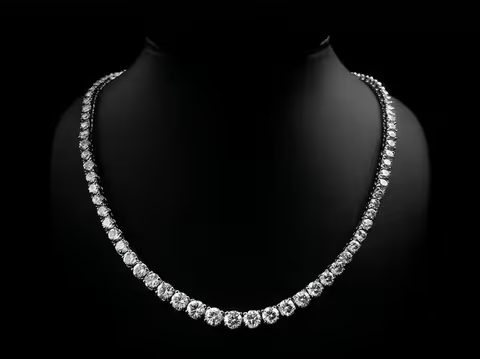
| Tennis Necklace | Continuous line of matched diamonds |
| Cluster Necklace | Multiple diamonds grouped together |
| Statement Necklace | Bold, multi-diamond compositions |
| Layered Necklace | Designed for stacking or layering |
Table: Popular Diamond Setting Techniques in Necklaces
| Setting Type | Key Characteristics |
|---|---|
| Prong Setting | Maximizes light exposure |
| Bezel Setting | Surrounds diamond for protection |
| Pavé Setting | Small diamonds set closely together |
| Channel Setting | Diamonds secured between metal walls |
| Invisible Setting | Diamonds appear seamlessly aligned |
Diamond Necklace Design Workflow Overview
A typical diamond necklace design process includes:
- Concept Development Design inspiration and layout are defined.
- Diamond Selection Stones are chosen for cut, size, and harmony.
- Metal Framework Creation Necklace structure and links are formed.
- Stone Setting Diamonds are secured using selected techniques.
- Length and Fit Adjustment Necklace proportions are finalized.
- Final Inspection and Finishing Alignment, security, and polish are verified.
This workflow ensures visual balance and structural reliability.
FAQs
1. What defines a diamond necklace design?
It is defined by how diamonds and metals are arranged to create a wearable necklace.
2. Why is symmetry important in diamond necklace designs?
Symmetry enhances visual harmony and balance.
3. Are all diamond necklaces designed for formal use?
No. Designs range from minimal everyday styles to elaborate formal pieces.
4. How do settings affect diamond appearance in necklaces?
Settings influence light reflection, security, and overall brilliance.
5. Do diamond necklace designs require regular inspection?
Yes. Periodic checks help maintain stone security and alignment.
Conclusion
Diamond necklace designs represent a refined balance of artistry, material science, and technical craftsmanship. Through careful selection of diamonds, precise setting techniques, and thoughtful structural design, these necklaces achieve both elegance and durability.
While trends continue to evolve through minimalist styling, mixed cuts, and ethical sourcing considerations, the foundational principles of balance, symmetry, and quality remain constant. Supported by gemological standards, structured design workflows, and specialized tools, diamond necklace designs continue to hold a prominent place in fine jewelry traditions and modern aesthetic expression.